


Turning financial knowledge into financial opportunity
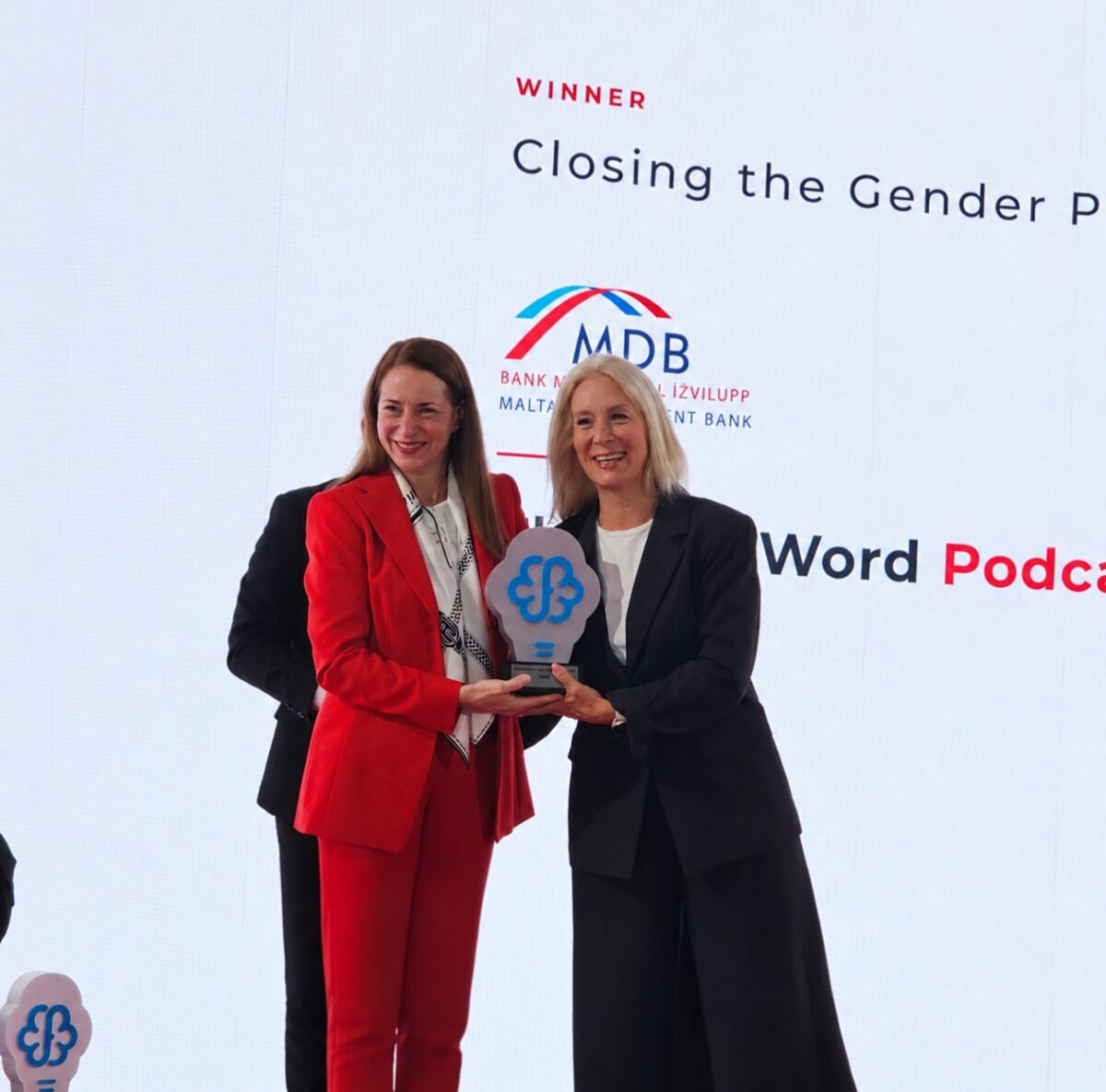
Malta Development Bank took part in the Financial Wellbeing Conference 2026, where CEO Alison Micallef joined the panel on money, behaviour and wellbeing and the Bank presented the Closing the Gender Pay Gap Award.
The Financial Wellbeing Conference 2026 took place on Thursday 15 October and brought together voices from Malta, Finland and the United Kingdom to examine what shapes people’s financial outcomes. Speakers from the public and financial sectors and from academia discussed financial education, consumer protection, decision-making and the pressures facing young people. A recurring thread was that access to information does not automatically lead to better decisions, and that education programmes work best when they are built around the real challenges of their audience and give people the chance to practise.
From the individual to the wider environment
MDB Chief Executive Officer Alison Micallef took part in the panel Money, Behaviour and Wellbeing, moderated by Matthew Caruana, CEO of JA Malta. The panel moved the conversation from the individual to the wider environment, asking whether people who have the knowledge and the right habits also have the opportunities to manage their money well, build income, start businesses, access finance and create assets.
Ms Micallef explained that knowing what to do with money and having the opportunity to do it are two separate matters. A person may understand budgeting and saving perfectly well, yet when income barely covers the essentials, knowledge on its own has limited effect on their financial position. Financial education gives people tools, and the wider responsibility is to make sure that realistic opportunities exist for using them, from access to education and decent earning prospects to the possibility of starting or growing a business and building financial security over time.
For young people in Malta, she pointed to the transition from potential to opportunity. A young person may hold the qualifications or a promising idea and still lack the savings, family support, experience or financial track record needed to take the next step in further study, entrepreneurship or financial independence. Stronger links between education, employers, financial institutions and public bodies can make these transitions easier, while questions such as housing affordability and the cost of living call for wider responses than financial products can provide.
Where a development bank makes a difference
Ms Micallef described MDB’s role as working alongside commercial banks to address the gaps that can hold back otherwise viable investment. The SME Guarantee Scheme helps banks lend to smaller businesses where limited collateral or a short track record might otherwise stand in the way, and the Guaranteed Co-Lending Scheme brings MDB and commercial banks together to share the financing and the risk of larger investments. The aim is to enable viable businesses to invest, grow, become more productive and create opportunities across the economy.
Financing barriers can appear at any stage in the life of a business. An established SME may need funding to expand, enter a new market or improve its operations, and a creative enterprise such as an architectural practice, a design studio or an audiovisual business can be fully viable without the kind of assets a traditional lender expects as security. Businesses that wish to invest in more sustainable operations often face significant upfront costs, and MDB offers targeted instruments for SMEs, for cultural and creative businesses and for sustainable investment.
Education offers a direct example of finance supporting a person’s future. Students with the ability and motivation to specialise further can be held back by tuition fees or living costs. MDB’s earlier student financing schemes helped around 800 students with more than €33 million in support, and StudentAssist builds on that experience by helping eligible students finance further studies, including certain living and travel costs. Students are not required to begin repayments while they are studying, and a further period follows completion, so that finance can support an investment in skills and future earning potential within a commitment that remains suitable and manageable.
Household wellbeing and the economy it depends on
Financial wellbeing depends on the household budget and on the economy in which households earn and spend. A business that can invest keeps people in work, creates new roles and provides services that families rely on. MDB guarantee schemes have helped finance projects such as childcare centres and health-related investments, which give families practical support and generate employment. During the pandemic, the Covid-19 Guarantee Scheme reached more than 560 businesses employing over 40,000 people, which shows how closely household income is linked to business continuity. The same reasoning applies to strategic infrastructure, and the electrification of airfield operations at Malta International Airport is a current example, supported by a €5.4 million MDB loan and €5.4 million in EU grant funding that MDB helped to secure. From its establishment to the end of 2025, MDB facilitated €688 million in cumulative financing, and Ms Micallef emphasised that what matters most is what those funds make possible.
On the responsibility of financial institutions, she said that people need to understand what is being offered, whether it suits them, what it costs and what they are taking on, and that providing information is only the first step toward making it understandable. Responsible financing includes being open about the fact that some proposals cannot be financed and that borrowing does not solve every problem. Because MDB works through partnerships, clarity between institutions and with the end customer matters, and trust grows when expectations are realistic, decisions are transparent and finance is directed to something that can create lasting value.
A closer link between education and opportunity
Ms Micallef noted that no single instrument can create equal opportunity. A loan guarantee can help a viable business overcome a collateral barrier and student finance can open the door to further study, while wages, affordability, access to skills and economic mobility call for action well beyond MDB’s mandate. MDB therefore works with commercial banks, public institutions and European partners to make existing resources go further and to reach viable opportunities that might otherwise be missed, and the impact of that work is found in the investments that actually take place.
Looking ahead, she called for a much stronger connection between financial education and genuine economic opportunity. Young people should certainly be taught how to manage money, and they should also be helped to develop skills, to find support for a viable business idea and to make responsible decisions about financing their future. This calls for education providers, businesses, financial institutions and policymakers to work more closely together. In her words, financial wellbeing covers managing the money you have today and also having a fair opportunity to improve your position tomorrow.
Recognising financial capability
The conference also hosted the Financial Capability Awards, which recognised initiatives that promote financial literacy and responsible financial decision-making. MDB presented the Closing the Gender Pay Gap Award, which Ms Micallef and JA Malta’s CEO handed to Trudy Kerr, host of The She Word. Seven awards were presented in total, each by a different sponsor, and the ceremony also highlighted the growth of the programme in schools, with participation rising to eight schools from five the previous year. Malta now counts 63 accredited educators and 11 accredited schools, and 3,435 students have received financial education through the initiative.
MDB thanks the organisers and all those who contributed to a conference that placed financial wellbeing within the wider question of opportunity, and looks forward to continuing to work with its partners so that viable ideas and capable people have the means to move forward.
Quick FAQ
What did MDB say at the Financial Wellbeing Conference 2026?
Financial education gives people tools, and wider opportunities such as access to education, income and finance are needed to use them.
How does MDB help businesses that cannot get finance?
Through the SME Guarantee Scheme and the Guaranteed Co-Lending Scheme, which work with commercial banks to share risk where collateral or track record is limited.
What is StudentAssist?
StudentAssist is an MDB scheme that helps eligible students finance further studies, including certain living and travel costs, with no repayments during studies.
What award did MDB present?
The Closing the Gender Pay Gap Award, presented to Trudy Kerr, host of The She Word.